Saturday, 26 June 2010

mmm Digestive biscuits


There have been many occasions during our time here in Bolivia when something happens that is just very surreal. Today was one of those moments. We walked into a supermarket to collect a few supplies for an afternoon at the park and walked down one of the isles only to find ourselves looking at things which were familiar and normal and yet were so out of place. Brand names such as Cadburys, Colmans, John West Tuna fish, Rose's marmalade, Jacobs crackers, Fruit pastels, Robinsons and Schweps. It tooks us some time to register that the special offer labels were actually talking english money - Special offer, 2 for 1.50. Of course all of these items were at highly inflated prices however we just could't resist a little treat of digestive biscuits. Its the small things in life that make all the difference!

San Juan

Wednesday 23rd of June was the day to celebrate San Juan here in Bolivia. It is supposedly the shortest and coldest night of the year in recognition of the birth of John the Baptist. A tradition that was introduced by the spanish colonialists. Traditionally people would build and burn bonfires with wood from old pieces of furniture in the streets in both the towns and the cities and eat hotdogs. In previous years we have experienced some these antics as the streets fill with smoke and fireworks are set off all over the place (No health and safety here!).

In anticipation of much smoke and noise, and Alana's fear of fireworks, I spent the entire afternoon preparing her for what was to come later on in the evening, ensuring her that it was nothing to be afraid of, and to focus on the pretty lights in the sky as opposed to the loud noises. She was beginning to get the idea, and was talking about it all afternoon, a conversation filled with many Whys. At 7pm in the evening we set off to our pastors house to celebrate with others. It was unusually quiet in the streets, however we just assumed it was all to start later on.

The hours slowly ticked by and still nothing. It turned out that the government had actually banned the lighting of bonfires and the use of fireworks this year, due to the amount of smoke that was normally produced, which has been so bad in the past in places such as La Paz so as to constitute the need of a bank holiday the following day simply because it hasn't been safe for people to drive due to low visibility because of the smoke.

So we were spared much of the trauma of Alana wailing and griping hold of us, or at least we were until very late in the evening when a few explosions started up around near our home which meant somewhat of a sleepless night for us all.

Wednesday, 16 June 2010

On a high point


Saturday 5th June I stood at the highest point I have ever stood in the world. Together with the 3 students I was looking after from Messiah College, USA and some other friends I climbed up Mount Tunari, which is something like the 5th highest mountain in Bolivia. Having left Cochabamba at 6:30am at an altitude of 2,500 metres above sea level we travelled by car up to 4,600 metres and then walked up to 5,040 metres. It was only a 440-metre climb but at that altitude it was enough and we all had many rests for air! 3 of the group continued to get to the second peak on Tunari at 5,100 metres, but I had had enough by then.
On the way up we saw an Andean Fox and some Condors, which was great. Adrian, the 8 year old son of Pepe (the Filter project monitoring and evaluation guy) accompanied us on our hike, he did amazingly well. It was fantastic to see what a great encouragement his dad was in order to keep him going. They didn’t quite make it to the top but to walk up to 5,000 metres is some achievement for an 8 year old boy.

What is the water filter project?

The project is a one year scientific experiment to see how well this particular water filter works. It is a simple filter made in the US that strain out bacteria and microorganisms that cause sickness and diarrhoea in children and adults. The project started last November, and is targeting mothers with children less than 3 years of age.

Information was initially collected from hundreds of mothers within the communities in and around Uspa Uspa in Cochabamba. The mothers were then divided up into 4 different groups. One group was a control group who receive nothing during the experiment period, a second group receive training sessions on behaviour change, with regards to how they can improve their health and drinking water (i.e. by boiling water and washing hands before eating), a third group received just the filters and instructions as to how to use them and the last group received both the water filters and the training sessions on behaviour change.


Throughout the year 3 water samples of drinking water are taken from the homes, as well as follow up questions regarding the health of the children and families. These results are then analysed to assess what changes if any are taking place. The initial results after just the second round of water testing, which we did with the students, are already showing positive results from the use of the water filters. At the end of the study, all those who have taken part in the experiment will be given a water filter.

With the students we were taking the second round of water samples and recording the changes found in the samples after 24 or 48 hours. The chemical that we added to the samples was used to detect the presence of microorganisms that fed on faecal material. The presence of these particular microorganisms (there are many different types in the water) would change the colour sample from clear amber to black (this could range from just a few black specs appearing in the sample or the entire sample going black). Some of the samples we collected demonstrated a high level of contamination as they very quickly turned black, however, we saw some more encouraging results as the samples from the filters had significantly lower levels of contamination. There was not much time for chatting with the mothers when taking the water samples, as there were so many to do. However, Emily and Roanna had the opportunity to do this in the focus groups that they took part in during the second week.

The biggest problem that is faced with a project such as this in the area in which it is being done is that it is a community that is very transient. A family who could be easily found one week could be gone by the next having either moved to the city or just another area of the community. The Mothers involved in the project have often moved house within the community every couple of months or have left the community and returned either to the countryside or moved to another country for work. This has added quite a high level of frustration to those doing the experiment, however, at present the numbers involved still enable to experiment to be viable.

An unexpected visit to Cochabamba

For one reason or another I don’t think that I have been to Church once in the last month. 3 weeks ago we were just about ready to all walk out the door to go to church when I received a text message from one of our international staff members in Cochabamba saying ‘Please call me’. I duly called Erik to find out what the problem was then kick off my shoes and spent the rest of the day on the computer and making phone calls, because his eldest son was seriously ill in hospital. Below is the link to their blog and an amazing story of God’s provision and healing of Josiah their son. http://lindquistfamily.spaces.live.com/default.aspx

The following week became very busy, checking daily with the family and reporting to others about what was going on, as well as trying to work out what we should do with the team of 3 students who where supposed to be spending the next 2 weeks with the Lindquist family working on a water filter project. We decided that instead of just sending them home that I would go to Cochabamba and take care of the team for their first week as there was a large quantity of water sample testing that needed doing, and a lack of personal to do it.


My week in Cochabamba was a busy one with many early mornings and late nights with John, Emily and Roanna from Messiah College, USA. John had just graduated as a Chemistry teacher and Emily in nutrition, community health and Spanish. Roanna had one more year to complete in the same studies as Emily. For the two weeks previous they had all been in another part of Bolivia living in a rural community with a larger team from the college.

It was a real privilege for me to work with and to get to know these 3 young committed Christians who were seeking to serve God and working out His calling on their lives. It was also a privilege to get to share our faith and encourage each other. We had some good days together visiting peoples homes to collect water samples (the second in a series of 3 tests) to analyse the condition of their drinking water.

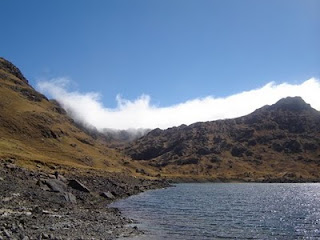
As well as working hard we also got to do some sight seeing and visited Lake Waru Waru just under 4,000 metres above sea level and climb up Mount Tunari. Another important part of our time in Cochabamba was to be an encouragement and support for the Lindquist family as they watched and waited to see how Josiah was doing.

Last Sunday Sarah and Alana flew down to Cochabamba to join us and we had a good couple of days with the Students and the Lindquist’s, helped no end by the fact that Josiah came out of hospital after being in for just 2 weeks.

Sucre Evaluation Trip

This was 4 long, but very good days, and a great opportunity to get to see what FH is doing and to learn a lot from it. These are just some of the highlights from my time travelling around the countryside.

Horno C'kasa
On the first day we got to see one of the success stories of Child sponsorship in one of the poor suburbs of Sucre. We met 3 young women (all Christians) who were part of a group of 7 young women who had set up a small business providing cakes and other sweets for events and meetings. The business has been going for about a year and I think all 7 of them are studying at University as well as running this business. Of the 3 that were in the meeting one was studying business, another medicine and the other nursing. The latter had been in the Child sponsorship program for 6 years.

We also saw a Doctor who works for FH teaching some of the reception age children about the importance of washing their hands. It was also the first day of a de-worming campaign that they were starting at the school.

Llave
On the second day we travelled 3 hours Northwest of Sucre to an area in North Potosi, to visit some communities where FH has been for a number of years. These communities are at around 3,500 -4,000 metres above sea level and life is hard, made more so by the way their fatalistic beliefs keep them trapped in poverty.

We visited a new community where FH has been working for a couple of years called Llave (Key). In that community FH has helped to build a ‘centro de acopio’ (processing centre) for preparing and sorting potatoes and other crops for sending to the market. FH has also built a road to give them better access to the principal town and an irrigation canal to help improve their crop yields and diversity.

Though the community is very grateful for all that FH has done they have not yet learnt or accepted all that FH has been teaching them. So while we were there two of my colleagues were giving the community members of the association a hard time (in a friendly way) about them needing to get their backsides into gear. They were saying this because although the community knew they were now responsible to look after these 3 infrastructure projects, they were not taking the initiative to do the repair work. This was an interesting example of the process of change that is needed within the communities we work in. Communities are always willing to have organisations do things for them but when you turn around to them and say now you get on with it they often don’t. My colleague commented to me that this process of handing over the responsibilities normally takes a couple of years for the community to accept and start to change its thinking.

Dependency is another big issue faced by many people in communities such as these. They either believe themselves that they cannot do anything on their own, or over the years they have been told they can’t do anything because organisations come in and say the community needs this or that then they do it. By doing this many organisations cause more harm than good as they are reinforcing the message that the community is not able to do anything by itself.

Chuquisaca Central
On days 3 and 4 I had a surprise. It was the first time I had been into this area which was southeast of Sucre and dropped down to about 2,000 metres above sea level. I had expected the housing to look similar to those in North Potosi. But I was surprised to find them in a Spanish Colonial style. White washed walls and curved clay tiles on the roofs, and a generally much greener place with taller trees. What a difference altitude makes to how a place looks and what can grow there.


We travelled around the 4 municipalities (areas equivalent to our counties) visiting various FH projects. It was such a stark contrast to the communities in North Potosi. There was still a lot of poverty but at the same time things were different. The Plazas (the central feature of every town in Bolivia) were in pristine condition and full of green and they had hotels and a tourist trade. Where as in North Potosi the plazas were rarely finished or in a poor state of disrepair and the people often look downtrodden.


FH began working in this area at about the same time we moved to Bolivia, to work with small and medium sized businesses. The aim being to work with those that were already established but who needed some more help to become independent. FH currently has funding from two different sources both with the same aim, but with one focusing more on exchanging technical knowledge to help these businesses take off and the other helping with some infrastructure projects as well.

The highlight from this part of the trip was in seeing what FH was doing with two different Associations. These were made up from a number of people from the community (in this case around 50-70 people) who after harvesting their crops brought them to the ‘centros de acopios’ (processing centres), so that they could then be sold together and the profits returned to them. Thus getting a better price for their crop and not all going individually to try and sell their crops.

Other organisations have been working in these communities in the past and FH is now helping them in the final stages of becoming independent and able to meet their own needs and looking for new markets for their produces.

Both associations where growing chillies, maize (these are big seeded white, yellow and red), and amaranth (a very small high protein grain, about 1mm diameter). All of these were dried and then turned into different things. The chillies were dried and then either sold whole or ground into chill powder; the maize was ground and with other things made into a very nice hot drink called api; the amaranth was either popped (like you do with pop corn) and sold like that or turned into biscuits or cereal bars (mixed with honey and sometimes coated with chocolate). They also mixed the maize and amaranth together to make cheesy puffed crisps like watsits.


FH is helping them to improve their methods of production, how to manage their finances and find markets for their products.


The first association still had much work to do. They were in the middle of having a new processing centre built with the help of FH that will house all of their work in the same place, but they still have a way to go with finding their markets and hygiene standards. When we visited the area where they were processing amaranth into biscuits and cereal bars, there where lots of flies and bees around the open honey pots! Also their wiring system worried me a bit! Never touch wires in Bolivia you never know where they go!

The second association was a much more clean and slick operation with us needing to wear protective clothing. They already had their markets worked out which included local schools to provide breakfast for the children.

Both of these associations that we visited were part of an association of associations which is further strengthening their place in the market. Some of their products are sold here in La Paz.

The Joker
Throughout the trip I was with a guy called Juan Carlos who was a bit of a joker. He was a laugh to be with but throughout the trip he would not let me sleep as we travelled from place to place, he kept jabbing me in the ribs saying ‘Ed please don’t sleep!’ This got a bit wearing after a while. Here is a picture of him on the right and Jamie (who works on Child sponsorship) I’ll let you think of a caption for his expression!

Monday, 31 May 2010

Mothers Day


May 27th was mothers day which was celebrated in every arena possible over the course of a number of days. It began in the office on Wednesday with yummy cakes and a gift to each mother. On the Thursday Alana came home from kinder with a card and a pretty yellow rose. Saturday Alana was part of a short performance put on especially for all the mummys. They sang a number of songs then we were able to have a look at all the artwork that the children had been busy preparing for their mothers. Then on Sunday just when we thought it was all over all the mums were called out to the front of church and were prayed for and presented with a gift.

Tuesday, 11 May 2010

Moulding Chronicle May 2010

Dear Friends,

We have been learning many new things over the last few months both about the work that FH is involved with and a part of Gods plan for the future direction of the organisation. This month we would like to share with you one important aspect of the work that FH does, that is also a part of God’s plan for the future.

There are many Evangelical Churches in El Alto (the migrant city above La Paz ), however, unlike most evangelical Churches in the UK, they are very closed to the community around them. Over the last 5 years, FH has worked with about 250 Churches in El Alto. Churches that have wanted to learn and been willing to change their worldview. Worldview, being the way a person perceives the world around them.

Through a series of training workshops with Pastors and congregations our staff have been teaching; a biblical worldview, the place of the Church within a community, integral ministry and how to think and plan for the future (not common here, the Aymara language only has a past and present tense). They have also been teaching the churches about seed projects. Projects that are planned to help the church recognise and respond to needs within their community.

Such projects are short term, i.e. a few hours and are resourced entirely from within the church in finance and personnel (this helps to break the begging bowl mentality of dependence). The projects are a service to the community and in such demonstrate God's love. Examples of such projects are cleaning the streets, and erecting street signs. The churches are encouraged to complete 2 such projects a year that are well planned and well organised.
During a recent visit, Ed visited 5 Churches that were responding to the need to change. This is the fruit of just 2 of those he visited. The first had started a Christian School, teaching Biblical Principles at its core. Changes have been so evident in the pupils that children are now attending from all across El Alto. This year sees the first graduates. Professionals, wanting to take the Biblical Principles they have learned into the work place. The second church, positioned next to a University was running a restaurant to provide a cheap but balanced diet for Students which was also providing opportunities for evangelism.
Many of these things may seem common sense to us from a western back ground but for a people who have never been taught to think for themselves it is all new. If you wish to read more about the visit and how the programme runs and what some of the other churches are doing then please look at the more detailed report found on our blog (http://mouldings-online.blogspot.com/) Over the following months we hope to share with you some more of what FH is doing and what we are learning through it.
Thank God for:
• A companion family
• The boldness and courage to speak God’s truth
• The different things we are learning
• Peace about just living the here and now

Ask God for:
• Wisdom as to whether we should extend our contract which finishes in October 2010.
• Insight and discernment of the culture

With much love
Ed, Sarah & Alana

Sunday, 9 May 2010

Anyone for a hotdog?

On saturday we had the opportunity to meet the families of those we work with at the office as we all got together for a barbeque at one of the parks in La Paz. The sun was shining (as it does regularly now at this time of year) and both the food and the company was good. In true Bolivian fashion, the strict 10 am start drifted into 12.30/1 oclock. The strict program that had all been planned out so carefully, just fizzled. However, on this occasion, it didn't really matter as it just created the time and space to get to know each other a bit better, and have some fun.

It was really nice to see eveybody interacting and the children all playing together, and to feel a part of it all. The only thing thing that seemed rather strange to us was that they served up hotdogs to everybody, then about an hour later, the rest of the food (Potatoes, rice and salad) why they couldn't have done it all together we were not quite sure, but thats cultural differences for you.

Thursday, 6 May 2010

A visit to El Alto


Last month I (Ed) spent a day up in El Alto (the migrant city above La Paz at an altitude of over 4000m above sea level), visiting the work that FH has been doing with the Churches there.

There are many Evangelical Churches in El Alto. In just one section of the city you can easily find over 30 Assemblies of God Churches, let alone the other denominations present in the same area. Sadly however, the quantity of churches is no indicator of the quality of the churches or their outreach to the communities around them. Unlike most evangelical Churches in the UK many are closed to the community around them, and are only interested in those within its walls.

Over the last 5 years a two-man team has worked with around 250 Churches all over the city, in a program called Church Strengthening. The idea of the project has been to work with Churches that were interested in learning about; a biblical worldview, integral ministry and the place of the Church within the community.


Worldview or paradigm is the way in which every person views the world around him or her, which effects how he or she responds to it. No one culture or worldview is better than another; each has good and bad points, thus the idea of this part of the training was to look at what was good within their culture. From there they were to look at what God says is a good and healthy worldview based on what the bible says. Through this training they seek to help the Church understand its role as a church. Over time they have seen that whilst teaching the churches has had a positive effect, they have seen far greater results when they have walked with people on their journey of discovery and built up personal relationships opening up their eyes to God’s plans.


Through a series of training workshops with the Pastors and their congregations over the period of 3 years, our staff are teaching the churches: their place within their community so they can minister to the community, meeting its needs whether that is in health, education or developing the local economy, what is integral ministry, how to think and plan for the future (not common here, especially where the Aymara language only has a past and present tense) and to get the Church to carry out seed projects within their community. These are simple projects like cleaning the streets of rubbish (of which there is always a lot), or putting up street signs. These are to be short projects, just a morning or afternoon, that are resourced completely from the church in terms of finances and people (breaking the begging bowl mentality of dependence). They are created with the aim to serve the community and through which demonstrate God’s love. In doing these projects twice a year the churches learn how to plan and organise.


Such work is not always as easy as it sounds as many of the pastors have full time jobs, and so need to work around these jobs to be able to come to the training sessions. The other issue is that many of the pastors lack a basic education, with most having ever only received between 2 ½ to 5 years of basic education. This means that many are not even able to read and write.

If pastors lack a basic education and in many cases the ability to read it makes you wonder how they are leading and teaching their congregations (in case you are wondering pod casts and recordings of sermons are not a resource available to these people), what is their theological training? The answer to these questions is poorly. Therefore this is part of the challenge when working with the Churches helping them to understand the different themes at a suitable level to their understanding.

Another part of the program that the FH team runs is TOT, (Training Of Trainers). Over the past 5 years they have learned that although they have a very good reputation in El Alto among the Churches, they are still strangers. Because of this they have begun to train people within the Churches in these same themes, so that they are then equipped to share within their Church in a way that is more effective. The idea being that the work then multiplies with the trainers training new trainers.

This is long and hard work that often goes unseen for some time, but they are seeing results now in a few of the Churches, which has been very encouraging. During the day I visited 5 Churches all of which were very different. One Church had started a Christian School and was teaching its pupils Biblical Principles. Positive changes have already been seen in the children and now parents want their children to go there because of this. This year they are seeing their first students graduate as professionals, people who will take the Biblical Principles they have learned into the work place, generating change. Another church was next to a University and had started a longer-term project using its own resources to run a restaurant to provide a cheap but balanced diet for the Students as this is a need the Church has seen and acted on. It is also providing opportunities for evangelism.

We then went to a completely different Church where the pastor had died and his teenaged son had taken over responsibility. With an elderly and sick congregation (of about 20 people) they had built a small Church for about 50 people from their own resources. The pastor of the next church was a rarity. He was older and normally the older pastors do not like any suggestions of change (sound familiar!), as it may threaten their job and their security so they do not want to listen. However, this pastor has changed his way of thinking and taken it to another level. For 5 years they have been running with a child sponsorship program with another organisation called Compassion for around 300 children, which runs classes for the children in the mornings and afternoons. The pastor has realised that one day the funding from Compassion will stop and so instead of residing to fate, he has told his church that they need to start thinking about how they can fund this project in the future to keep it going. Finally I went to a Church that was just beginning the process of changing its thinking. There were about 50 people of all ages learning about God’s intention for the Church.

To see some more of the results of this program and what can happen when the Church has its eyes open to the needs around it. Check out the project FH is involved with (and looking for funding from the UK) in a community called Puerto Camacho on the edge of El Alto. FH started there with Church Strengthening work and now FH is helping the Church to reach out into the community and help change the lives of some of the children living in that area.
http://www.uk.fhi.net/bolivia/