Monday, 13 September 2010

Birthday girl


Last Sunday our little girl turned the grand old age of 4 and we celebrated in style with her little friends playing pass the parcel, musical bumps and pin the tail on Boots (as the theme was Dora the explorer, we felt her monkey friend Boots would make a suitable substitute for a donkey!). Even the grown ups enjoyed taking part in that one. Everybody enjoyed themselves and Alana is already asking when her next birthday is.


A Bolivian Wedding

Just over a week ago we got to experience a truly cultural experience as we were invited to celebrate in the festivities of the wedding of one of our work colleagues.


The service was due to start at 12.30, and we were ensured by the bride to be that it would certainly be no later than 10 minutes late in starting, so we arrived promptly at 12:30 and waited, and waited and waited. It was good to have Alana with us who kept both ourselves and our friends entertained with balls of plasticine.


About 3 quarters of an hour later something began to happen, those leading the service took up their positions at the front and began announcing the arrival of various members of the wedding party, from the minister, God parents, parents, ring bearer, flower girls and finally the groom followed by the arrival of the bride. To our westernised mindsets, it all seemed a little disorganized with members of the announced party not having arrived on time or the reluctance of some of the little ones to come forward, with bits of music fading in and out between entrances.


The service itself once it got underway was not quite as we are used to with no singing but lots of talking and many prayers and words of encouragement from various different people. At the end of the service the wedding party formed a line and all the guests were invited to pass along the line to greet people and offer words of encouragement and congratulations.


From the church we moved onto the reception venue, and were very surprised to see not just one wedding cake or even 2 or 3 but in fact a total of 15 wedding cakes, all delicately layered with cream, with an intricate pattern painted around the edges. Before the bridal party arrived Alana decided to take a closer inspection of the cakes and to our utmost embarrassment decided to try them out!


Once settled at the reception our waiting continued as more guests begin to slowly trickle in. Time was ticking by and getting onto 4 o’clock before there were any signs of the bridal party arriving, by which time we were all beginning to feel a little hungry. Once again Alana did very well with keeping our table entertained by giving out crayons and getting everybody to draw pictures in her book. Eventually the wedding party did arrive and we were launched into another mini service as the legal part of the wedding was carried out with the registrar, and more photos.


Then it arrived... the food or at least a large platter filled with crisps, we all hurriedly made space on the table for it only to quickly discover that we were actually only to take a few for ourselves before it was taken to the next table, but at least the hunger pangs were stayed for a little while longer until the real food arrived. It wasn't quite what we were expecting but was greatly received all the same - a pork sandwich for everyone!


After the food was finished we waited expectantly for the next installment of what was going to happen next, which was a parade of all the gifts where everybody lined up in order to present their gifts to the married couple, which included a dresser, dining room table and chairs, and pining money to their clothing! Once free of their gift each person was then presented with a fizzy orange drink and a small plate of pastries.


At this point in the celebrations, 5pm, most the folks we knew were saying their goodbyes so we took the opportunity to also make our exit, particularly as Alana was beginning to get a bit boisterous with some of the furniture. We had been told that the whole thing was due to finish around 10 in the evening, so the events of the next 5 hours remain a mystery to us along with who got to eat all of those 15 cakes!

Monday, 16 August 2010

Our local Multicine


On returning back to Bolivia in March, we were very happy to discover that a new multiscreen cinema complex had recently opened its doors, just a little way up the road from where we live. On weekends it has become a very popular place to visit by many people from all across La Paz, as they try out a wide selection of different foods available within the newly created food court, before or after watching any number of films displayed on the 10 screens.

What makes this place so unique however, is the fact that it is still a hustling, bustling building site! Busy construction workers, seem to toil endlessly building onwards and upwards and to the side as well. Very often when we walk past there is a long line of 10 or more cement lorries all waiting to empty their load and have their goods pumped up to the top of what must be now at least about 16 floors if not more.


Monday, 12 July 2010

Serving the local community


One of the important principles taught to local churches is the need to be out serving their local communities. As a way of demonstrating this principle in practice it was decided that all the staff within the La Paz FH office should be involved in a small seed project. As in so many cases it is very easy to talk the talk but yet not as easy to walk the walk, so we were all encouraged to actually do something in relation to what we talk about others doing.


As a result of this idea, 3 small seed projects were put together in such a way as to support and encourage a church or individual. The office staff were divided into 3 teams and assigned to one of the projects. We were assigned to the team that were to help paint the inside of a small church in El Alto, called ‘Centro ministerio Agape’ and Ed was designated co leader to co ordinate the project. The church had been in existence for 9 years and was in its 3rd year of receiving training from FH about its place within the community.The small congregation had already done much to build the church and prepare it for painting, our job was to give a helping hand to paint it.


Finally after a couple of date changes a team of 8 people (Plus Alana) set off for El Alto at 8am armed with paint brushes and rollers to the small church. When we arrived our first job was to sand and wipe down all the walls to prepare them for the paint. Ed and I then enjoyed a cultural lesson on how to mix paint. Rather than just purchasing a big tin of paint to the colour requirements, they buy big tubs of white paint and then small bottles of the required colour to mix in then mix together with water. This is all very well and good if you can do all you need to with the first mix, as it appeared to be quite difficult to create exactly the same colour second time around.


Still we managed to do a good job and worked well together as a team and had a good laugh. For Ed and I it was a nice change to have been doing something practical again, having spent so much time sitting at computers in recent months. Even Alana had a go at it all, sanding the walls, mixing the paint and then turning her hand to painting. It was nice that she had little company to enjoy it with too. It didn’t take too long before the girls were best buddies and sharing their lolly pops with each other.

By midday we had finished the job and enjoyed sharing a lunch together which some of the women from the church had prepared. It was an array of different food, which when served together was known as ‘Ajtapi’ . All in all a very satisfactory experience.


Monday, 5 July 2010

Moulding Chronicles July 2010

Dear Friends,


One of the big lessons we have been learning lately is the need to walk, not so much in the practical sense (though that is good to do) but more in the sense of walking alongside people as they find their way in life.


The mission statement of FH talks about walking with churches, lead- ers and families in overcoming all forms of human poverty by living in healthy relationship with God and his creation. However, up until recently we have never really grasped what this means.


We are gradually becoming aware of how key this principle is in all aspects of life, family, church and work. If we think of the example of Jesus, He impacted and touched the lives of thousands during his time on earth, yet he selected just a few to walk with closely. They walked together though good and bad times, with opportunities to try and space to fail. Yet Jesus was always there to help pick them up again and teach them new things as well as re-teaching some of the old things. He kept walking with them and by doing so had a far reaching impact on the whole world.


By walking with Jesus, the disciples got to see both his godly and human side such as times when he was hungry, tired, happy and sad. When we walk closely with people they get to see a lot of our human side, but also hopefully some of our more godly side too which challenges us to be consistently living up to Gods standards. Walking with somebody is not an easy quick fix solution, it takes time and a lot of energy. Yet it is also very effective.


Just as we have been seeking to walk with individuals and families here in Bolivia both through the local church and in the FH office, so you too have been important in walking with us on this journey. We could not have gotten this far without your prayers, support and encouragement, and so we are very thankful to you for that.


October sees the end of our first 3 year contract with FH. Through much prayer we have decided that it is right for us to extend that contract for a further 3 years or until God says otherwise.


Thank God for:

  • Being able to renew our contract
  • Good friendships
  • Safe travelling


Ask God for:

  • Rest, we are both feeling really exhausted, made worse by the fact that neither of us are sleeping well at night


We are very much excited and looking forward to what new things God has to teach us next.


With much love

Ed, Sarah & Alana

<><


Saturday, 26 June 2010

mmm Digestive biscuits


There have been many occasions during our time here in Bolivia when something happens that is just very surreal. Today was one of those moments. We walked into a supermarket to collect a few supplies for an afternoon at the park and walked down one of the isles only to find ourselves looking at things which were familiar and normal and yet were so out of place. Brand names such as Cadburys, Colmans, John West Tuna fish, Rose's marmalade, Jacobs crackers, Fruit pastels, Robinsons and Schweps. It tooks us some time to register that the special offer labels were actually talking english money - Special offer, 2 for 1.50. Of course all of these items were at highly inflated prices however we just could't resist a little treat of digestive biscuits. Its the small things in life that make all the difference!

San Juan

Wednesday 23rd of June was the day to celebrate San Juan here in Bolivia. It is supposedly the shortest and coldest night of the year in recognition of the birth of John the Baptist. A tradition that was introduced by the spanish colonialists. Traditionally people would build and burn bonfires with wood from old pieces of furniture in the streets in both the towns and the cities and eat hotdogs. In previous years we have experienced some these antics as the streets fill with smoke and fireworks are set off all over the place (No health and safety here!).

In anticipation of much smoke and noise, and Alana's fear of fireworks, I spent the entire afternoon preparing her for what was to come later on in the evening, ensuring her that it was nothing to be afraid of, and to focus on the pretty lights in the sky as opposed to the loud noises. She was beginning to get the idea, and was talking about it all afternoon, a conversation filled with many Whys. At 7pm in the evening we set off to our pastors house to celebrate with others. It was unusually quiet in the streets, however we just assumed it was all to start later on.

The hours slowly ticked by and still nothing. It turned out that the government had actually banned the lighting of bonfires and the use of fireworks this year, due to the amount of smoke that was normally produced, which has been so bad in the past in places such as La Paz so as to constitute the need of a bank holiday the following day simply because it hasn't been safe for people to drive due to low visibility because of the smoke.

So we were spared much of the trauma of Alana wailing and griping hold of us, or at least we were until very late in the evening when a few explosions started up around near our home which meant somewhat of a sleepless night for us all.

Wednesday, 16 June 2010

On a high point


Saturday 5th June I stood at the highest point I have ever stood in the world. Together with the 3 students I was looking after from Messiah College, USA and some other friends I climbed up Mount Tunari, which is something like the 5th highest mountain in Bolivia. Having left Cochabamba at 6:30am at an altitude of 2,500 metres above sea level we travelled by car up to 4,600 metres and then walked up to 5,040 metres. It was only a 440-metre climb but at that altitude it was enough and we all had many rests for air! 3 of the group continued to get to the second peak on Tunari at 5,100 metres, but I had had enough by then.
On the way up we saw an Andean Fox and some Condors, which was great. Adrian, the 8 year old son of Pepe (the Filter project monitoring and evaluation guy) accompanied us on our hike, he did amazingly well. It was fantastic to see what a great encouragement his dad was in order to keep him going. They didn’t quite make it to the top but to walk up to 5,000 metres is some achievement for an 8 year old boy.

What is the water filter project?

The project is a one year scientific experiment to see how well this particular water filter works. It is a simple filter made in the US that strain out bacteria and microorganisms that cause sickness and diarrhoea in children and adults. The project started last November, and is targeting mothers with children less than 3 years of age.

Information was initially collected from hundreds of mothers within the communities in and around Uspa Uspa in Cochabamba. The mothers were then divided up into 4 different groups. One group was a control group who receive nothing during the experiment period, a second group receive training sessions on behaviour change, with regards to how they can improve their health and drinking water (i.e. by boiling water and washing hands before eating), a third group received just the filters and instructions as to how to use them and the last group received both the water filters and the training sessions on behaviour change.


Throughout the year 3 water samples of drinking water are taken from the homes, as well as follow up questions regarding the health of the children and families. These results are then analysed to assess what changes if any are taking place. The initial results after just the second round of water testing, which we did with the students, are already showing positive results from the use of the water filters. At the end of the study, all those who have taken part in the experiment will be given a water filter.

With the students we were taking the second round of water samples and recording the changes found in the samples after 24 or 48 hours. The chemical that we added to the samples was used to detect the presence of microorganisms that fed on faecal material. The presence of these particular microorganisms (there are many different types in the water) would change the colour sample from clear amber to black (this could range from just a few black specs appearing in the sample or the entire sample going black). Some of the samples we collected demonstrated a high level of contamination as they very quickly turned black, however, we saw some more encouraging results as the samples from the filters had significantly lower levels of contamination. There was not much time for chatting with the mothers when taking the water samples, as there were so many to do. However, Emily and Roanna had the opportunity to do this in the focus groups that they took part in during the second week.

The biggest problem that is faced with a project such as this in the area in which it is being done is that it is a community that is very transient. A family who could be easily found one week could be gone by the next having either moved to the city or just another area of the community. The Mothers involved in the project have often moved house within the community every couple of months or have left the community and returned either to the countryside or moved to another country for work. This has added quite a high level of frustration to those doing the experiment, however, at present the numbers involved still enable to experiment to be viable.

An unexpected visit to Cochabamba

For one reason or another I don’t think that I have been to Church once in the last month. 3 weeks ago we were just about ready to all walk out the door to go to church when I received a text message from one of our international staff members in Cochabamba saying ‘Please call me’. I duly called Erik to find out what the problem was then kick off my shoes and spent the rest of the day on the computer and making phone calls, because his eldest son was seriously ill in hospital. Below is the link to their blog and an amazing story of God’s provision and healing of Josiah their son. http://lindquistfamily.spaces.live.com/default.aspx

The following week became very busy, checking daily with the family and reporting to others about what was going on, as well as trying to work out what we should do with the team of 3 students who where supposed to be spending the next 2 weeks with the Lindquist family working on a water filter project. We decided that instead of just sending them home that I would go to Cochabamba and take care of the team for their first week as there was a large quantity of water sample testing that needed doing, and a lack of personal to do it.


My week in Cochabamba was a busy one with many early mornings and late nights with John, Emily and Roanna from Messiah College, USA. John had just graduated as a Chemistry teacher and Emily in nutrition, community health and Spanish. Roanna had one more year to complete in the same studies as Emily. For the two weeks previous they had all been in another part of Bolivia living in a rural community with a larger team from the college.

It was a real privilege for me to work with and to get to know these 3 young committed Christians who were seeking to serve God and working out His calling on their lives. It was also a privilege to get to share our faith and encourage each other. We had some good days together visiting peoples homes to collect water samples (the second in a series of 3 tests) to analyse the condition of their drinking water.

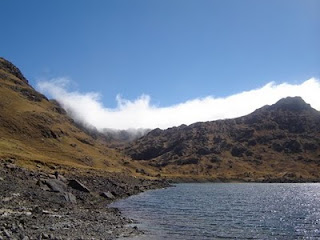
As well as working hard we also got to do some sight seeing and visited Lake Waru Waru just under 4,000 metres above sea level and climb up Mount Tunari. Another important part of our time in Cochabamba was to be an encouragement and support for the Lindquist family as they watched and waited to see how Josiah was doing.

Last Sunday Sarah and Alana flew down to Cochabamba to join us and we had a good couple of days with the Students and the Lindquist’s, helped no end by the fact that Josiah came out of hospital after being in for just 2 weeks.